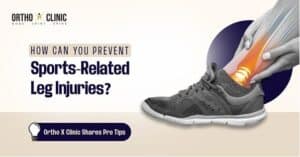

Ortho X Clinic Shares Pro Tips
Sports are an excellent way to stay active, build strength, and improve endurance — but
they also come with the risk of injuries, especially to the legs. From runners and footballers
to gym enthusiasts, sports-related leg injuries are among the most frequent reasons
athletes visit orthopedic clinics.
At Ortho X Clinic, we’ve treated countless athletes and active individuals for leg injuries
ranging from mild muscle strains to complex fractures. The good news? Most
sports-related leg injuries can be prevented with the right techniques, conditioning, and
precautions.
Here’s what our experts recommend.
Understanding Sports-Related Leg Injuries
Your legs are home to some of the body’s largest and most active muscles — the
quadriceps, hamstrings, calves, and glutes — as well as critical joints like the knees, hips,
and ankles.
Common leg injuries in sports include:
● Muscle strains (hamstring, calf, or quadriceps)
● Ligament sprains (ACL, MCL, or ankle ligaments)
● Stress fractures from repetitive impact
● Tendonitis (inflammation of tendons)
● Shin splints
● Contusions or bruises from direct impact
While these injuries vary in severity, most share common causes — poor warm-up, muscle
imbalance, improper footwear, overtraining, or inadequate recovery.
Pro Tips to Prevent Sports-Related Leg Injuries
- Warm Up Before Every Session
A proper warm-up prepares your muscles and joints for physical activity. Spend at least
10–15 minutes doing light cardio (like jogging or skipping) followed by dynamic stretches
such as leg swings, lunges, and hip rotations.
This increases blood flow, flexibility, and muscle responsiveness. - Focus on Strength and Flexibility
Strong muscles stabilize your joints and absorb impact better. Incorporate leg-strengthening
exercises like squats, lunges, calf raises, and step-ups into your routine.
At the same time, improve flexibility with stretching and yoga to prevent stiffness and
muscle pulls. - Gradually Increase Intensity
Avoid sudden jumps in workout intensity or duration. Gradual progression helps your
muscles and tendons adapt to stress and reduces the risk of overuse injuries. Follow the
10% rule — don’t increase your mileage, weight, or duration by more than 10% per week. - Wear Proper Footwear
Choose shoes that match your sport, playing surface, and foot type. Worn-out or
unsupportive shoes can lead to improper alignment and stress on your legs. Replace athletic
footwear regularly and use orthotic inserts if recommended by your doctor or
physiotherapist. - Maintain Good Technique and Form
Incorrect posture or movement patterns during sports can overload specific muscles and
joints. Get your technique assessed by a coach or physiotherapist to ensure proper
biomechanics, especially for activities like running, jumping, or lifting. - Prioritize Recovery and Rest
Your body needs time to repair and strengthen between workouts. Overtraining leads to
fatigue, which increases the likelihood of injuries. Schedule rest days, include stretching or
foam rolling, and ensure adequate sleep for optimal recovery. - Don’t Ignore Pain
Pain is your body’s way of signaling an issue. Ignoring discomfort can turn a minor strain into
a serious injury. Stop your activity immediately if you feel sharp or persistent pain in your leg
and seek evaluation from an orthopedic specialist.
The Role of Physiotherapy in Prevention
Physiotherapy is not just for recovery — it’s also a key part of injury prevention. At Ortho X
Clinic, our physiotherapists design customized programs focusing on:
● Improving muscle strength and flexibility
● Enhancing balance and coordination
● Correcting posture and movement patterns
● Identifying weak or overused muscle groups
These preventive strategies help athletes stay fit, mobile, and resilient.
When to See an Orthopedic Specialist
If you experience recurrent leg pain, muscle tightness, or swelling that doesn’t resolve with
rest, consult a specialist. Early diagnosis and intervention can prevent small injuries from
escalating into long-term issues.
At Ortho X Clinic, our team of orthopedic surgeons and physiotherapists provide
comprehensive care — from advanced diagnostics to rehabilitation — tailored for both
professional and recreational athletes.
Takeaway
Preventing sports-related leg injuries isn’t about avoiding physical activity — it’s about
training smart, listening to your body, and preparing it properly.
With the right balance of conditioning, rest, and expert guidance, you can stay active and
injury-free.
Book Your Sports Injury Assessment at Ortho X Clinic
Whether you’re an athlete recovering from an injury or looking to prevent one, Ortho X
Clinic offers specialized sports medicine and physiotherapy programs designed to
enhance performance and safeguard your legs.
Book your consultation today and take the first step toward stronger, safer movement.